The transition to renewable energy faces a fundamental challenge that has little to do with technology and everything to do with timing. Solar panels generate electricity when the sun shines, wind turbines spin when the wind blows, but demand for electricity follows its own rhythms—peaks in the morning as people wake, valleys in the dead of night, surges during heat waves when air conditioners run full blast. Bridging this gap between variable supply and fluctuating demand is where artificial intelligence is proving transformative.
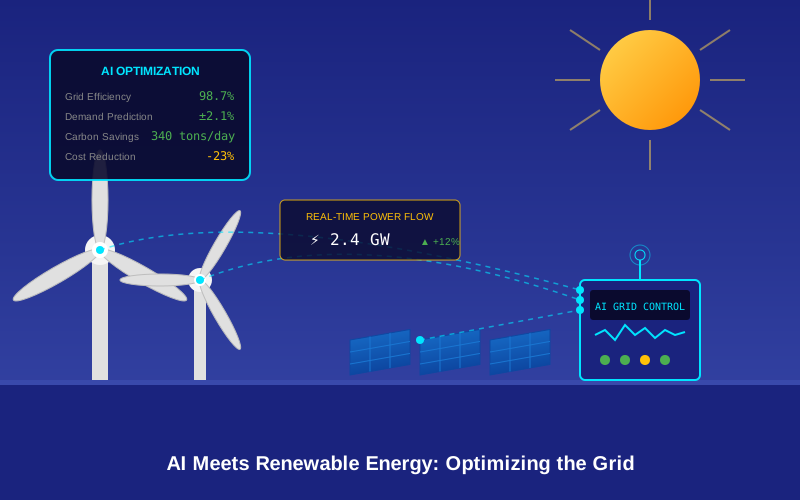
Machine learning algorithms can now predict solar and wind generation with remarkable accuracy, incorporating weather forecasts, historical patterns, and real-time sensor data to anticipate output hours or even days in advance. These predictions enable grid operators to plan accordingly, ramping up backup generation or activating demand response programs before shortfalls occur rather than scrambling to react after the fact. The result is a more stable grid that can accommodate higher percentages of renewable generation without sacrificing reliability.
Demand prediction has evolved with similar sophistication. AI systems analyze patterns in energy consumption across millions of customers, identifying not just aggregate trends but individual behaviors that influence grid load. Smart thermostats and connected appliances can be orchestrated to shift consumption to times of abundant renewable generation, reducing peak demand and minimizing the need for fossil fuel peaker plants. This coordination happens invisibly, without requiring conscious effort from consumers.
Battery storage represents another frontier where AI is making renewable energy more viable. Machine learning optimizes when to charge and discharge grid-scale batteries, maximizing the economic and environmental value of stored energy. Algorithms must balance multiple objectives: smoothing renewable intermittency, providing frequency regulation, and responding to market price signals. The complexity of this optimization problem is precisely suited to AI capabilities, and the results are impressive—AI-managed storage systems can extract significantly more value from the same hardware than rule-based approaches.
The distributed nature of modern energy systems presents both challenges and opportunities for AI optimization. Rooftop solar, home batteries, electric vehicles, and smart appliances create a complex web of energy producers and consumers. AI can orchestrate these distributed resources as virtual power plants, aggregating their collective capacity to provide grid services that once required large central facilities. A neighborhood of homes with solar panels and batteries, coordinated by intelligent algorithms, can contribute to grid stability in ways that benefit everyone.
The partnership between AI and renewable energy creates a virtuous cycle. More accurate predictions enable higher renewable penetration, which generates more data to improve predictions further. Each increment of intelligence in the grid unlocks additional potential for clean energy integration. The fully optimized grid of the future—responsive, resilient, and running primarily on renewable sources—is not a distant dream but an emerging reality, built one algorithm at a time.